
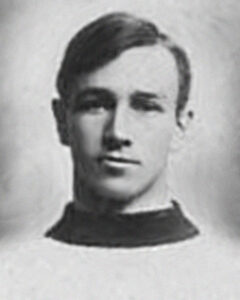
Cecil Blachford
Born: June 24, 1880
Montreal, Quebec, Canada
Died: May 10, 1965 (aged 84)
Montreal, Quebec, Canada
Height: 5 ft 8 in (173 cm)
Weight: 174 lbs (79 kg)
Position: Wing/Rover
Shot: Left
Playoff/Stanley Cup Challenges
| Year | League | Team | GP | G | A | Pts | PIM |
|---|---|---|---|---|---|---|---|
| 1902–03 | Stanley Cup | Montreal AAA | 2 | 0 | 0 | 0 | 6 |
| 1903-04 | Stanley Cup | Montreal Wanderers | 1 | 1 | 0 | 1 | 0 |
| 1906-07 | Stanley Cup | Montreal Wanderers | 3 | 0 | 0 | 0 | 3 |
| 1907–08 | Stanley Cup | Montreal Wanderers | 4 | 5 | 0 | 5 | 5 |
| Stanley Cup totals | 10 | 6 | 0 | 6 | 14 |
Cecil William Blachford (1880–1965) was a Canadian professional ice hockey player who was a key figure in the successful Montreal Wanderers teams of the early 20th century. Playing primarily as a Rover or Winger, Blachford was celebrated for his speed, aggressive play, and beautiful stick-handling, with one contemporary writer calling him “easily the most finished player on the forward line” of the Wanderers. His career included two seasons with the Montreal Hockey Club’s senior team, known as the “Little Men of Iron,” where he helped win the Stanley Cup in 1903.
Blachford was most prominent during his long tenure with the Montreal Wanderers, where he was a member of the team that won the Stanley Cup four times: in 1906, 1907, 1908, and 1910. He also served as the team’s captain from 1906 through 1908. His career was marked by some challenges, including missing most of the 1906 season due to blood poisoning and being the victim of a criminal assault on the ice in 1907 by Ottawa Hockey Club player Charlie Spittal. After retiring briefly after the 1908 season, he returned for the 1909–10 season to help the Wanderers capture their final Stanley Cup in the newly formed National Hockey Association (NHA), before retiring for good.